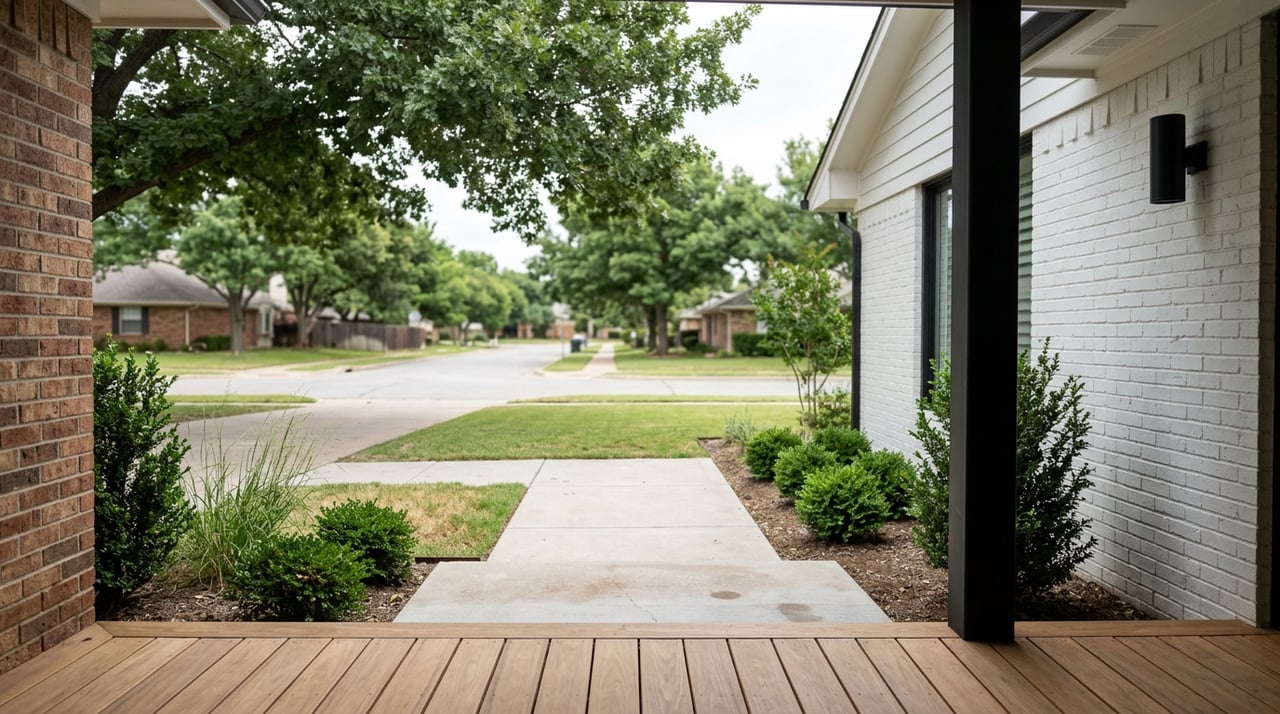
Moving to Norman Oklahoma? Neighborhoods Newcomers Should Explore
May 28, 2026
May 28, 2026
Thinking about moving to Norman? You are not alone. Norman offers a mix that can be hard to find in one place: a college-town center, established central neighborhoods, suburban west-side living, and a quieter rural edge farther east and southeast. If you are trying to figure out where you might fit best, this guide will help you compare Norman’s key areas, understand price and lifestyle differences, and narrow your shortlist with more confidence. Let’s dive in.
Norman is Oklahoma’s third most populous city and sits about 20 miles south of Oklahoma City along Interstate 35. That location makes it a practical choice if you want access to the metro while still living in a city with its own identity.
The city also offers a wide range of amenities that matter in day-to-day life. Norman reports 67 neighborhood and community parks, four recreation centers, an aquatics center, and extensive trail and sports facilities. For many buyers and renters, that balance of access, recreation, and neighborhood variety is a big part of the appeal.
Norman’s housing market sits between Oklahoma City and Edmond on price. Current data shows a median listing price of $332,000 in Norman, compared with $292,990 in Oklahoma City and $415,000 in Edmond.
That means Norman can feel like a middle ground for relocation buyers. You may find more budget flexibility than Edmond, while still having access to a broad housing mix and a strong range of neighborhood options.
Realtor.com also shows 828 homes for sale, 306 rentals, and a $1,400 median rent in Norman. That mix gives newcomers options, whether you are buying right away or renting first while you learn the city.
If you want the most walkable, central feel in Norman, the areas near the University of Oklahoma and downtown are the first places to consider. This part of the city tends to offer quicker access to campus, local shops, restaurants, and older neighborhood character.
The tradeoff is that housing inventory can be tight, and game days can bring extra traffic, parking restrictions, and barricades in parts of the campus area. If that lifestyle still sounds appealing, a few neighborhoods stand out.
Campus Corner, the University neighborhood, and Larsh-Miller are the most campus-adjacent options newcomers should know. OU describes Campus Corner as a historic district with shops, services, and restaurants, which helps explain why this area often appeals to people who want a more active, walkable daily routine.
These neighborhoods also lean more rental-heavy than many other parts of Norman. Current inventory shows Campus Corner with 1 home for sale and 2 rentals, the University neighborhood with 4 homes for sale and 10 rentals, and Larsh-Miller with 10 homes for sale and 7 rentals.
If you want to live near OU without depending on a car for every short trip, this is the strongest fit in Norman. OU says campus life is walkable, and transit options are stronger here than in many other parts of town.
If you like older homes and a more historic central setting, Original Townsite and Old Silk Stocking deserve a close look. These neighborhoods sit in Norman’s older core and offer a different feel from the campus edge or newer suburban subdivisions.
The City of Norman says Original Townsite was part of the first acreage platted in 1889. It is about 80% single-family residential, with homes built from 1889 to 2024, though most structures date from 1920 to 1950.
Old Silk Stocking was Norman’s premier residential district in the early 20th century. The city describes it with mature trees, sidewalks, and proximity to downtown, which gives newcomers a helpful sense of its setting and character.
From a pricing standpoint, Original Townsite can stand out for value. Realtor.com currently shows a $174,000 median listing price there, with 7 homes for sale and 4 rentals, while Old Silk Stocking has 6 homes for sale and 1 rental.
First Courthouse belongs in the same central conversation, but it offers a somewhat broader housing mix. The city describes it as one of Norman’s oldest neighborhoods, with mostly single-family homes plus scattered garage apartments, duplexes, and higher-density apartments.
That variety can make it worth considering if you want a central location but want to keep your options open. Current inventory shows 4 homes for sale and 2 rentals in First Courthouse.
It is also notable that the City of Norman included First Courthouse, Old Silk Stocking, and Original Townsite in its 2026 down-payment assistance program for eligible buyers in core neighborhoods, with assistance up to $14,999. For some buyers, that may make the historic core even more attractive.
If your ideal move includes a more suburban layout, newer-feeling surroundings, and easier car-based routines, west Norman is often the best fit. This side of town tends to appeal to buyers who want a neighborhood setting with nearby parks and recreation.
One of the clearest examples is Hall Park. Realtor.com shows Hall Park at a $315,000 median listing price, with 19 homes for sale, no active rentals, and 46 median days on market.
That pricing puts Hall Park above some of Norman’s historic core neighborhoods, but still below the citywide median listing price. For many relocation buyers, it can feel like a middle lane between central Norman character and higher-priced suburban options elsewhere in the metro.
The Brookhaven area adds to west Norman’s suburban appeal. Nearby Brookhaven Park includes a playground, walking course, basketball court, and soccer field, which gives residents easy access to outdoor recreation.
The City of Norman also identifies Brookhaven Boulevard as a residential collector street and notes that it uses a neighborhood traffic management and calming program to address speeding and cut-through traffic. For buyers comparing west-side neighborhoods, that detail can help paint a clearer picture of how the city manages growing residential areas.
If you want more privacy, larger lots, or a more rural edge, look to east and southeast Norman. This is the side of the Norman story that often appeals to buyers who are less concerned with walkability and more focused on space and separation.
Areas near Lake Thunderbird and out toward Little Axe are especially useful to know. The city’s AIM land-use plan describes urban reserve areas as agricultural or natural-vegetation land with large-lot single-unit homes, limited development during the life of the plan, and access that is largely vehicle-based.
The Ward 5 council page says that ward is mostly rural and stretches to the far side of Lake Thunderbird and toward Little Axe. Norman Fire also notes that the city spans both dense urban and growing rural areas.
For some buyers, this part of Norman offers exactly what they want: more land, more privacy, and less neighborhood density. The tradeoff is that you should expect to drive more often for errands, school, work, and daily activities.
The best Norman neighborhood for you depends less on labels and more on how you want to live each day. A helpful way to narrow your search is to think in terms of lifestyle first, then compare inventory and price.
Here is a simple way to frame it:
If schools are part of your relocation decision, Norman Public Schools says you should verify school assignment by address, not by neighborhood name. That matters because attendance is address-sensitive, and neighborhood labels do not always tell you which school serves a specific home.
The district also says Pre-K is offered at every elementary site. State district information reports 25 school sites overall, which gives you a sense of Norman’s scale as a school system.
On the commute side, central Norman usually works best if you want more walkability and quicker access to OU or downtown. OU-area residents also benefit from campus shuttle service through CART, and the city’s Norman On-Demand microtransit has expanded west of I-35 to 36th Avenue NW and SW from Tecumseh to Lindsey.
West Norman and the city’s outer edge tend to make more sense if you are already planning to drive most places. That is not necessarily a downside, but it is an important lifestyle difference to weigh before you move.
One of Norman’s biggest strengths is range. You can choose a historic central neighborhood, a campus-adjacent rental-friendly area, a west-side suburban setting, or a quieter rural edge without leaving the same city.
That flexibility is a big reason Norman appeals to so many newcomers. Whether you want easier access to OU, more backyard space, a central location near downtown, or room to spread out near Lake Thunderbird, Norman gives you more than one path to feel at home.
If you are planning a move and want help comparing neighborhoods, pricing, or the right fit for your timeline, The Aguilar Group can help you explore Norman with clear local guidance and a personalized strategy.
Stay up to date on the latest real estate trends.
We pride ourselves in providing personalized solutions that bring our clients closer to their dream properties and enhance their long-term wealth. Contact us today to find out how we can be of assistance to you!